
Serving 300 law enforcement agencies and 13 judicial district courts in the state along with federal prosecutors, it’s no wonder the New Mexico Department of Public Safety Forensic Laboratory recently hired two law clerks to respond, track and manage subpoenas, discovery requests and other legal documents for all three lab locations in Santa Fe, Las Cruces and Hobbs.
The two Forensic Law Clerks – Renea Rodriguez and Norianna Quinones organize every subpoena and legal request coming in, pouring over every detail from case numbers to dates and other verifying information. They then respond back and work with lab scientists on organizing schedules for pre-trial and trial dates efficiently for them to testify where needed and balance with other legal requests and their usual forensic science analyses.
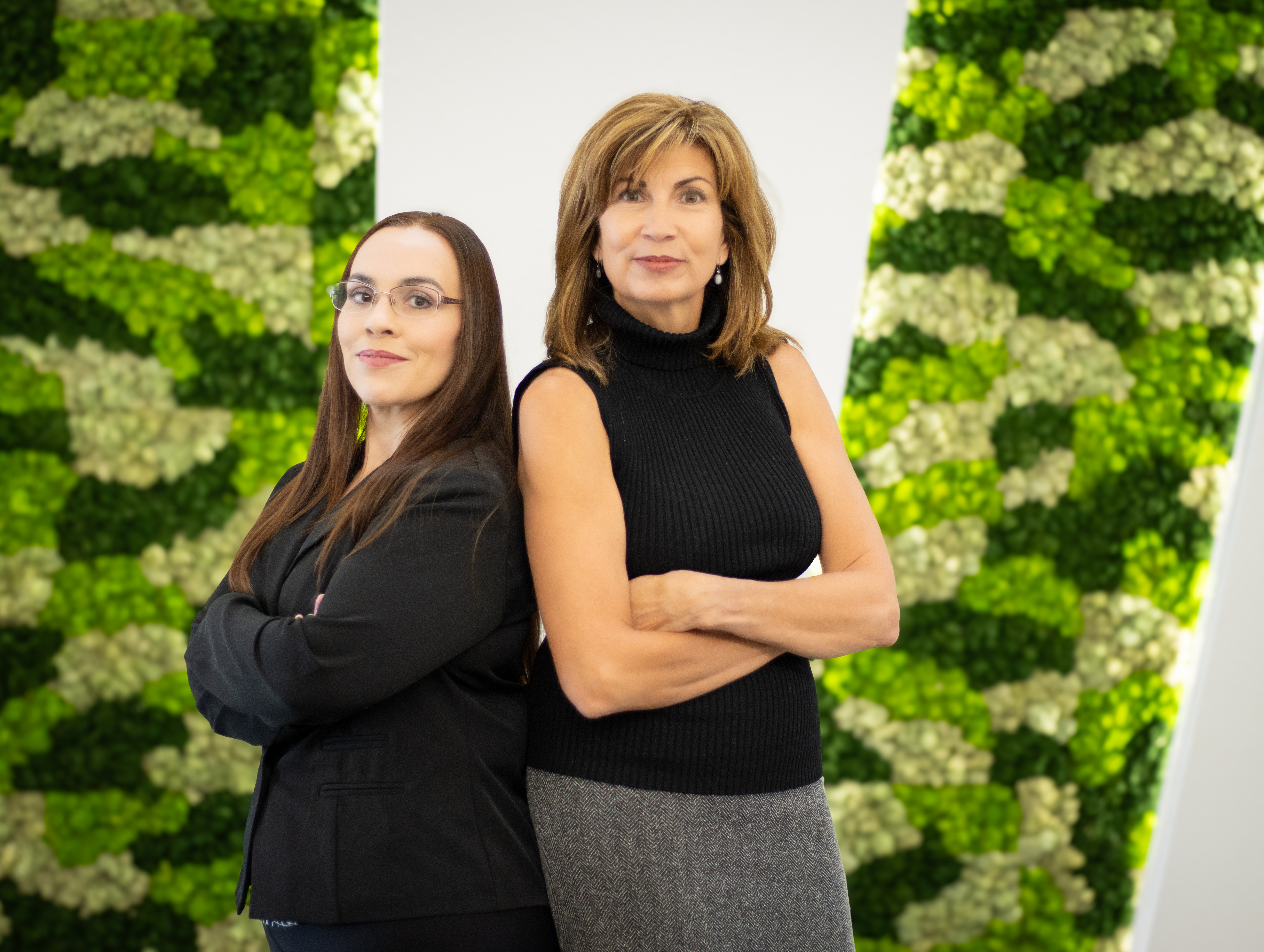 From left to right: Norianna Quinones and Renea Rodriguez.
“We’re far more efficient than before we hired these positions two years ago,” said Katharina Babcock, lab director. “They bring immense skills and experience in the legal field, which has allowed our forensic scientists to focus on their work and not on scheduling and responding back to courts, prosecutors and defense attorneys.”
Prior to Babcock hiring the law clerk positions, forensic scientists oversaw their own subpoenas, whether it was pre-trial interviews or appearing for court. For the Chemistry Unit as just one example, it was not uncommon to have over 10 subpoenas in a week per scientist. This would require the scientist to manage countless emails or phone calls to organize everything.
“With Renea and Norianna here, all that work is cut from the scientists time, and we can get back to our main focus, which is casework,” said Adam Wolff, forensic scientist at the lab in Santa Fe. “They can quicky and easily follow-up with the District Attorneys for the status of each case and learn whether we must travel to testify. Renea and Norianna are a great asset to the team. It is amazing that even though the forensic law clerks are stationed in Santa Fe, their work covers the scientists from Las Cruces and Hobbs too.”
Previously, it wasn’t unheard of to have a scientist drive 2-3 hours to a district court only to be told the case was put on hold or their testimony wasn’t needed. That rarely occurs now per Rodriguez and Quinones, because they are in constant communication with the District Attorneys and other legal offices regarding scheduling scientists for all legal obligations.
“These positions serve as a significant asset to the laboratory’s mission,” said Quinones. “It frees up a lot of time for the scientist to be in the lab doing analysis and testing, rather than sitting at their computers and going back and forth on scheduling and trying to figure out what trials they need to show up for and when.”
 Norianna Quinones working on the spreadsheet of subpoenas.
Work mostly consists of processing almost 300 subpoenas per month in addition to discovery requests and other legal requirements, saving countless hours of time for the forensic scientists in the lab, per Quinones.
“That is a significant amount of work taken off of the scientists, which frees up time to process evidence more quickly to get justice for the community,” she said.
Steve Guerra, who works as a forensic scientist in the Firearms and Toolmarks Unit of the lab in Santa Fe agreed.
“Norianna and Renea always display a positive and sincere attitude to assist scientists in any court situation,” he said. “They go out of their way to minimize the disruption that court appearances can be in our lives. They do it in a way that also meets the court’s needs without any conflicts. Testifying in court is our final responsibility in most cases that we work. Norianna and Renea are an integral part of how we can accomplish this goal.”
Together Quinones and Rodriguez have over 50 years of experience. Rodriguez started at a private law firm with a lawyer she calls “amazing,” spending 19 years of her career there. She worked in family law, in oil and gas, and water and worked with administrative law judges at the State Personnel Office for eight years.
“This was something that was created from the bottom up,” said Rodriguez of the forensic law clerk positions. “It feels good to work here. It’s fun, exciting and soothing – a relief to accomplish what we’re doing here.”
 Renea Rodriguez looks through a binder of subpoena documents at the New Mexico Department of Public Safety Forensic Laboratory in Santa Fe, New Mexico.
Rodriguez and a prior colleague who Quinones replaced recently worked on a plan to organize the work.
“We put our heads together (two years ago) and we came up with a comprehensive spreadsheet – how we were going to be filing our subpoenas (which are color-coded by lab and who completes the entry). From our skills – how we handled other cases prior to DPS -we came up with this concept, and how we were going to process these subpoenas, how we were going to calendar things, and it worked out perfect.
“Thank God for my colleague Norianna when she was hired. We really work well together. We respect one another, our knowledge and what we bring to the table. It makes this job more enjoyable when you have a colleague who has your back, you have her back.”
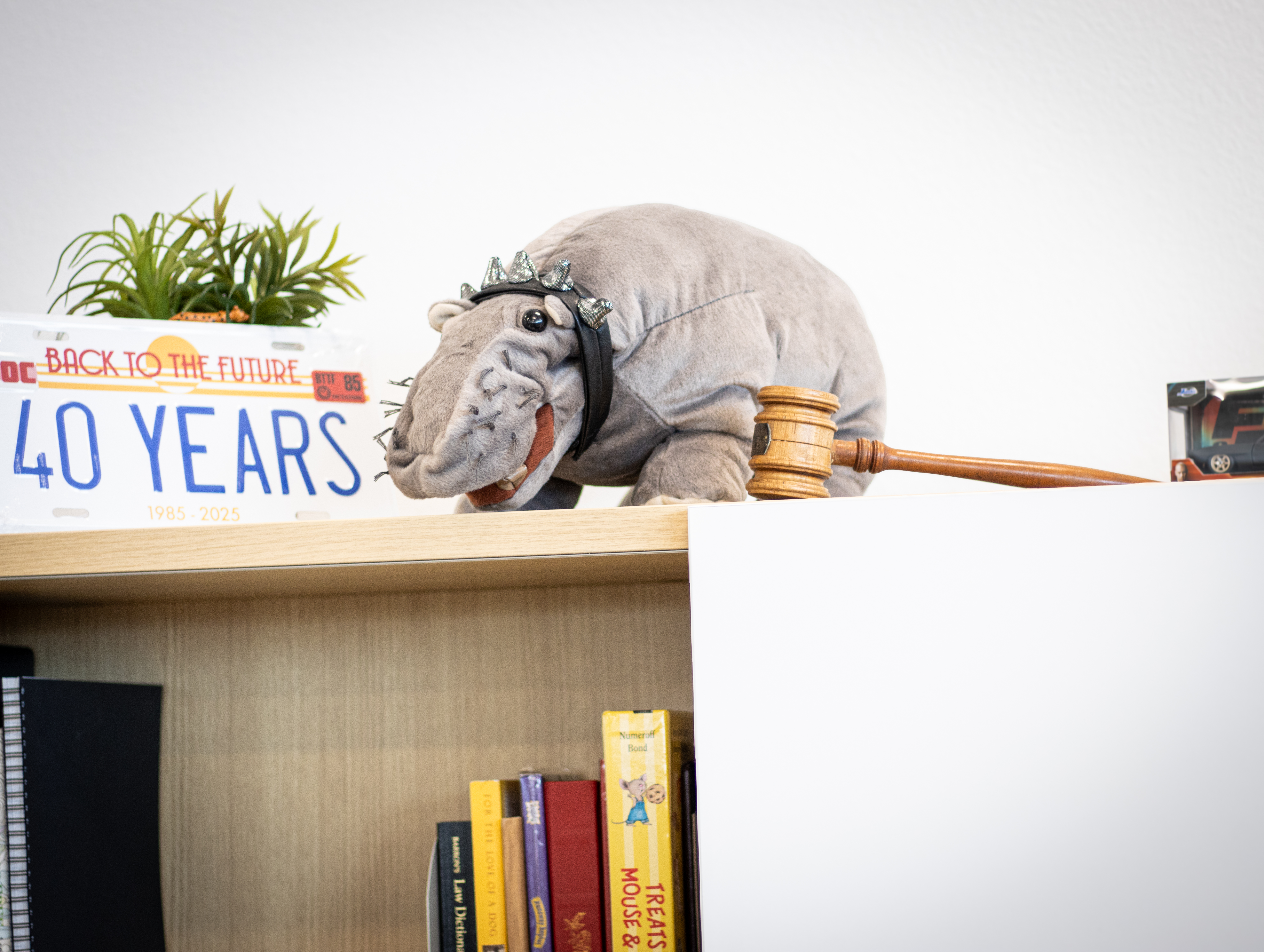 Norianna Quinones’ desk displays a hippo named Bert (Reference: fictional forensic scientist Abby Sciuto) from the show NCIS. “While Bert is a fictional character, his presence symbolizes the incredible talent found in the Forensic Laboratory,” said Quinones. “The forensic scientists here are just as remarkable and dedicated as Abby Sciuto, contributing to a vibrant and inspiring work environment.”
Quinones’ experience is a bit different, and she believes it compliments her teammate well.
“I had 18 years in and no intentions to leave,” said Quinones of her time with a district attorney’s office. “When I saw the positions open for the forensic lab, for the law clerks, I was interested. I printed the listing, and I had it on my desk and I said, ‘I’m going to apply.’ But then I said – ‘No, I can’t’ – this was a huge change. ‘I can’t do it.’ I can’t apply. So, I didn’t apply. But I left that job listing on my desk. It had been sitting on my desk, and I came across it about a year later and I decided I was going to apply thinking I could always turn it down if offered the position. So, I applied and got an interview and soon after got a call from Forensic Lab Director Katharina Babcock offering me the position. I completely panicked. I was like, ‘What do I do?’ I need to think about this. This is a huge change in my career. My dad advised me to do it and honestly it was the best thing I’ve ever done.”
The position has allowed Quinones who used to dream about cases and wake up panicking to not only find a sense of accomplishment when leaving the office at the end of the day but also find balance in her personal life.
“It has been amazing. I go home happy. We do have a lot of work and are extremely busy, but we find joy in it,” she said. “We are always happy. It has been an amazing place to work. And what do you think makes it an amazing place to work? Having great people to work with. The scientists don’t treat us any differently than their own colleagues. In fact, they’re always telling us how grateful they are for our work. Some of the scientists come and tell us, ‘you guys brighten the office, just hearing you guys.’ We take our job very seriously and it’s important work, but you also must enjoy the environment at the same time and that’s what we have here.”
Part of that serious work includes ensuring that protocols and rules are followed including scheduling of pre-trial interviews to ensure efficiency is maintained and scientists can function in their jobs and meet the demands of the courts.
“I always refer to, if you give a mouse a cookie (that they would want another cookie),” said Quinones of allowing exceptions to their protocols. “There are rare times we do have to adjust or change a process, but that is the exception to the rule, and we can’t be constantly making exceptions.”
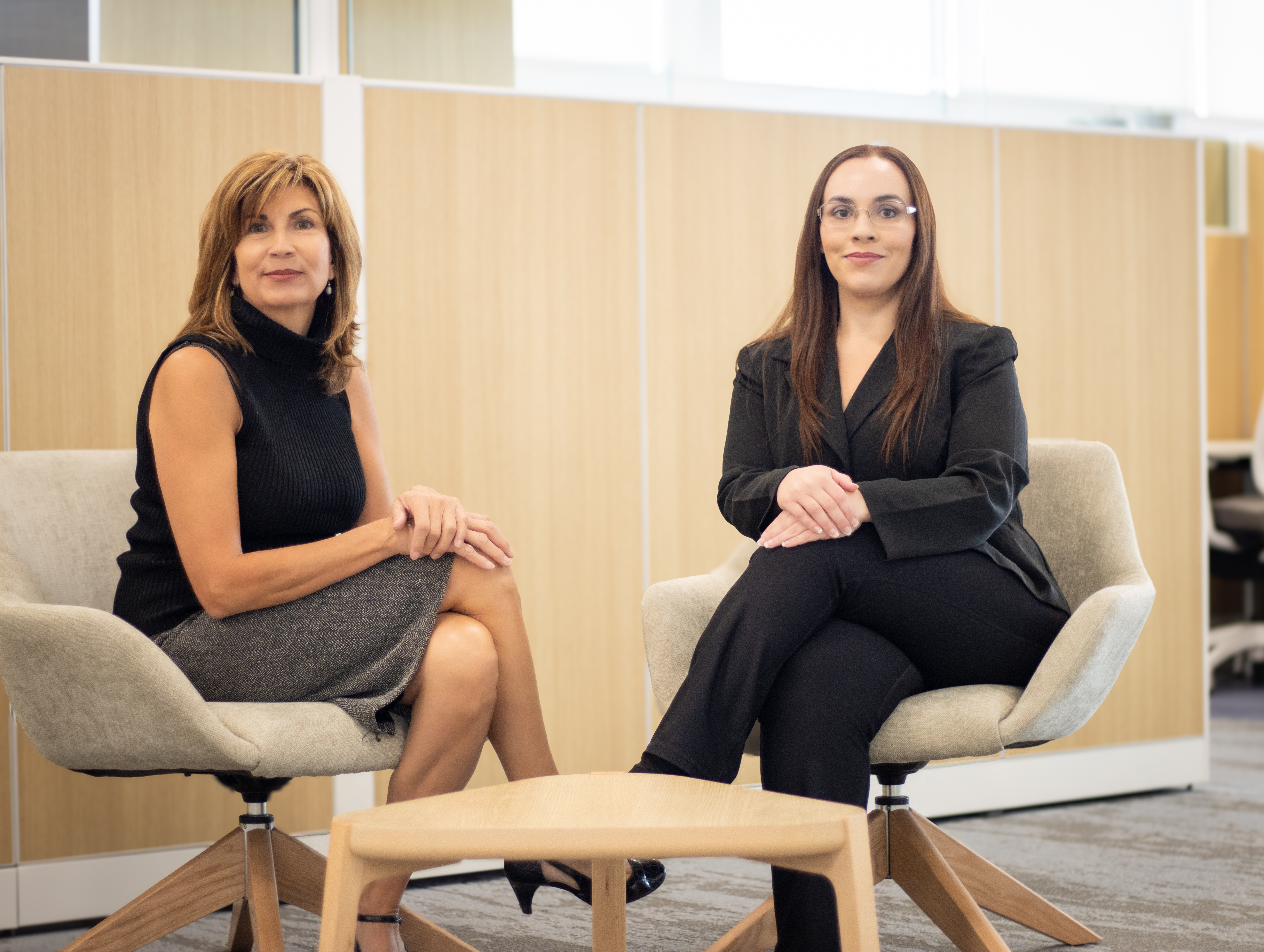 From left to right: Renea Rodriguez and Norianna Quinones.
Rodriguez referenced an example where they have 20 subpoenas for a block of time, and everyone wants a particular scientist on the same date:
“There’s turmoil for a while, because everybody wants Forensic Scientist Supervisor Eric Young, who is a drug chemist on this date, traveling on this day,” she said. “With our spreadsheet showing all the green color subpoenas for Santa Fe, we’re thinking – ‘how is Eric’s supposed to be in Alamogordo when he’s supposed to be in Taos or Las Cruces, when he’s supposed to be in Gallup? Or in Socorro, when he’s supposed to be in Bernalillo?’ You know, it’s kind of overwhelming when you see our spreadsheet. We organize in priority order, so let’s say a scientist has six different subpoenas for cases, the priority will be based on whichever subpoena comes in first.
“Our scientist are not machines or Superman where they can fly from one spot to the other, so we must be their reason. We must consider, is it fair to have them leave at three in the morning to get down to testify by eight? That’s not fair to anyone.”
So, Rodriguez and Quinones work with the District Attorney’s offices to schedule what makes sense, using priority order and ensuring both the mission is met and the scientists are not unreasonably unburdened.
Also, the forensic law clerks often check in before and after scientists travel to ensure they are safe.
“We’re like Mother Hens because we want to make sure our scientists get to the designated location,” said Rodriguez. “With our female scientists in particular, we make sure we check in with them when they travel three or four hours or more to get to a designated courthouse.”
Story by New Mexico Department of Public Safety Public Information Officer John Heil. Photos by DPS Media Relations Unit – Curtis Althaus.