Their building is unlabeled. They quietly determine scientific objective results behind the scenes. They don’t want recognition. They take pride in their work.
This describes the New Mexico Department of Public Safety Hobbs Forensic Laboratory.
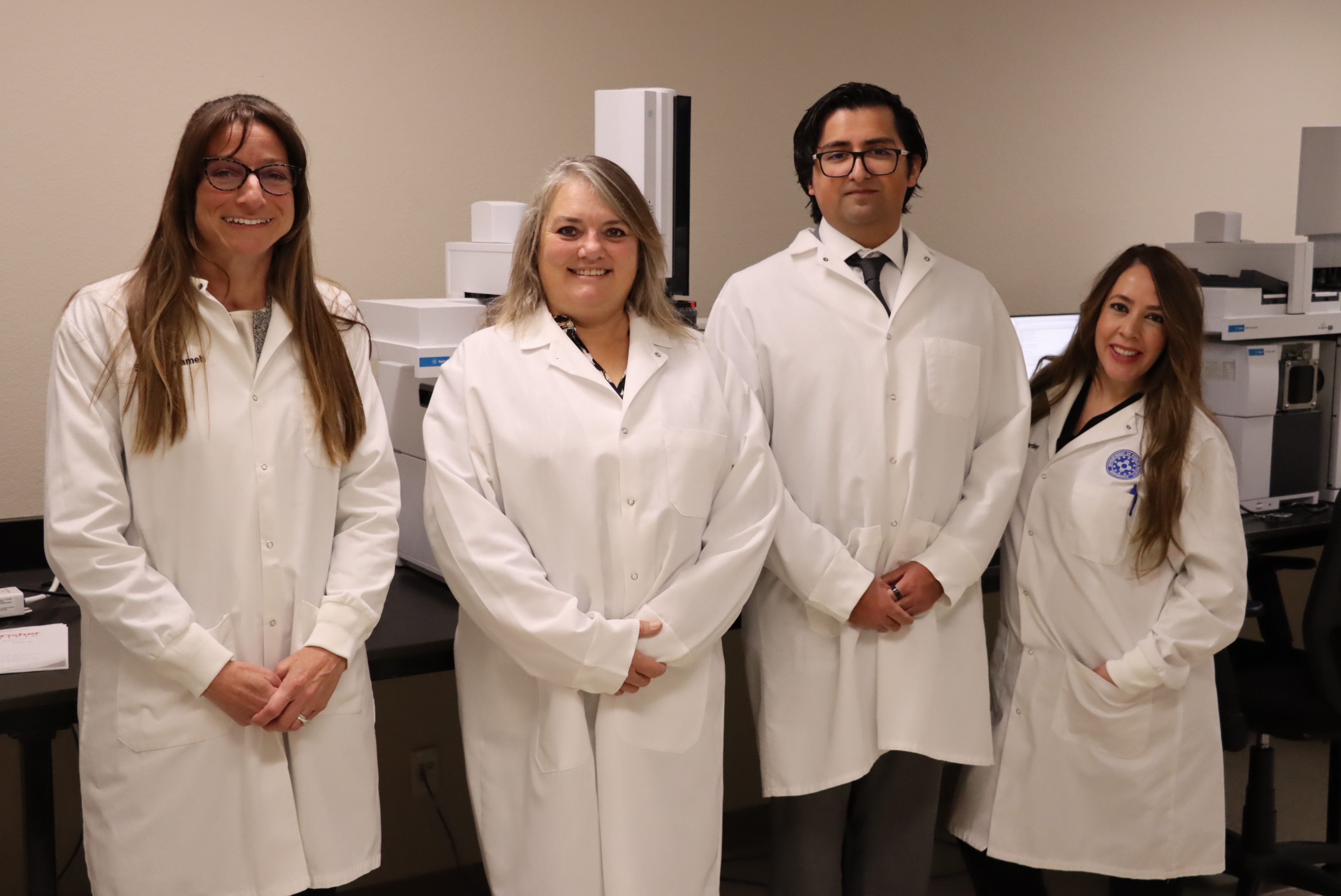 Meet the Hobbs Forensic Laboratory team from left to right: Sarah Walterscheid, Rebecca Morley, Angel Rivas and Azucena Hartley.
With approximately an average of 90 cases per month the past few years, this team of four work diligently to meet their mission to provide scientific analysis in criminal cases to law enforcement and judicial partners. Forensic Scientist Supervisor Sarah Walterscheid describes this as “one piece of the puzzle” within the criminal justice system.
“We enjoy working quietly here together, serving the public,” she said. “We’re analyzing evidence and providing objective results.”
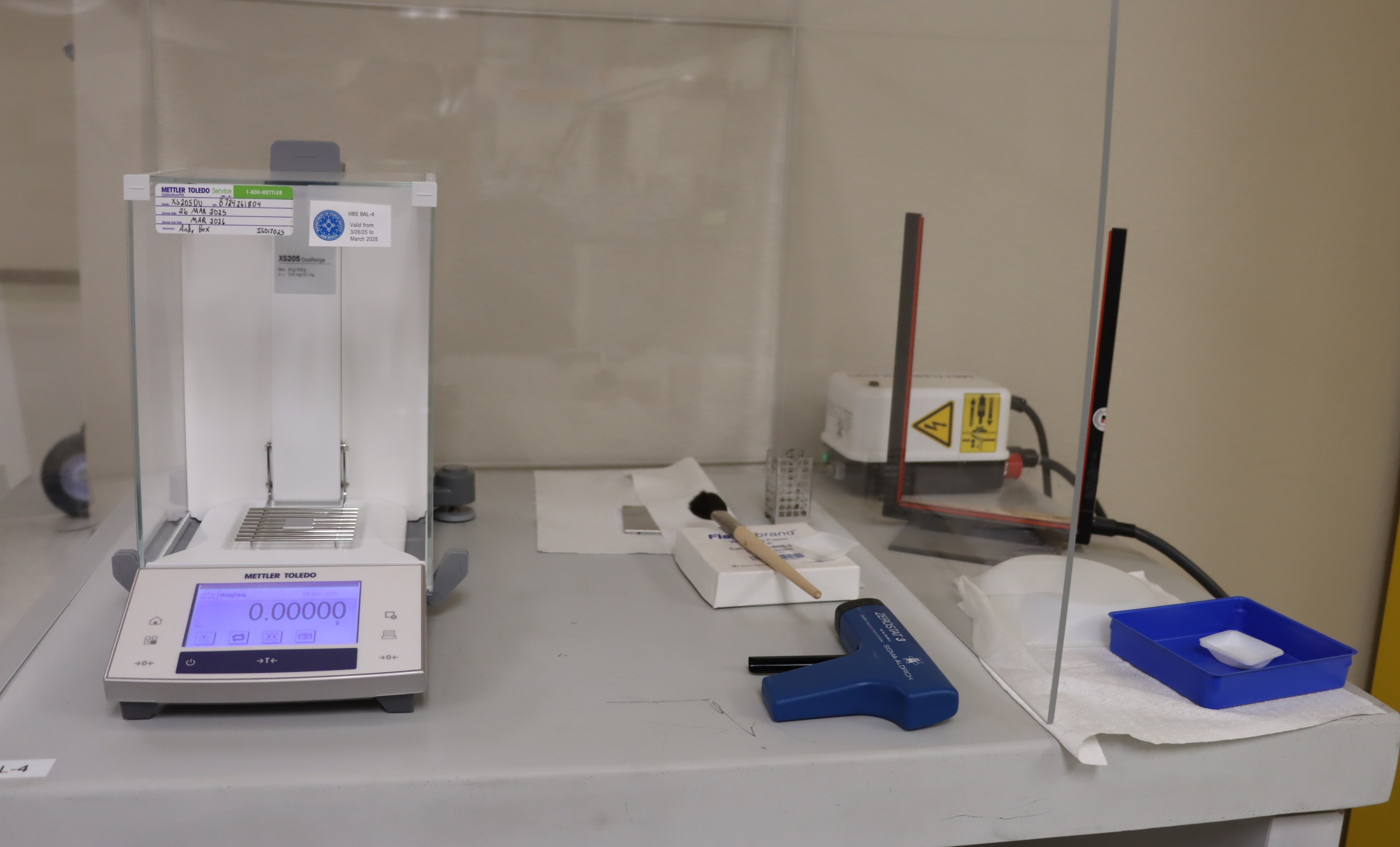 An analytical balance, used for weighing evidence (powder, crystalline substance and tablets) at the Hobbs Forensic Laboratory.
The Hobbs Forensic Laboratory specializes in analyzing controlled substances and Walterscheid believes the location allows the New Mexico Department of Public Safety to better be able to serve the southeastern corner of the state.
While the team is small, the cohesion is strong. In fact, Waltersheid and the Forensic Evidence Technician Rebecca Morley both worked as Crime Scene Technicians with the Hobbs Police Department before shifting over to the Forensic Lab.
The other commonality for Morley and Walterscheid is their interest in solving puzzles.
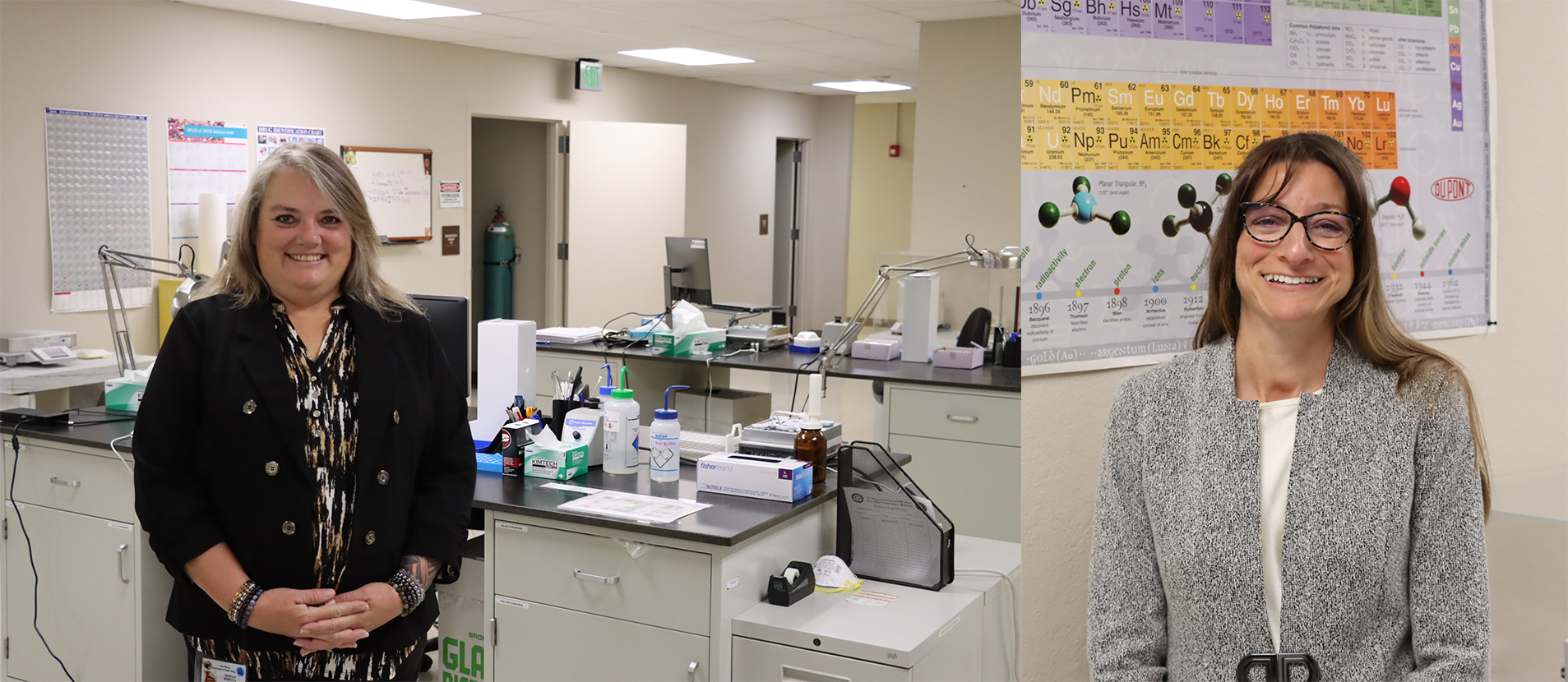 From left to right: Rebecca Morley and Sarah Walterscheid at the Hobbs Forensic Laboratory.
“I like the fact that we help solve one piece of the puzzle that could lead to complete information to solve a case,” said Walterscheid who has a background in biomedical engineering and worked in the pharmaceutical industry. “I enjoy being a Forensic Scientist because even though the samples don’t change a lot, every case is different. I like both the routine and the variability. It’s a nice balance of both.
“Our testing is very detailed, starting with ensuring what we are going to test belongs to the right case. It’s important that evidence is sealed and labeled properly. Then we have to describe what we’re doing and document the entire process. The techniques we use are routinely tested, mostly on a weekly basis, sometimes daily depending on the standard operating procedures for the specific technique. And of course, our results must be very detailed and clear. There’s a review process, so not only do we have to be detailed, after we draft everything, it gets reviewed twice, for technical and administrative purposes.”
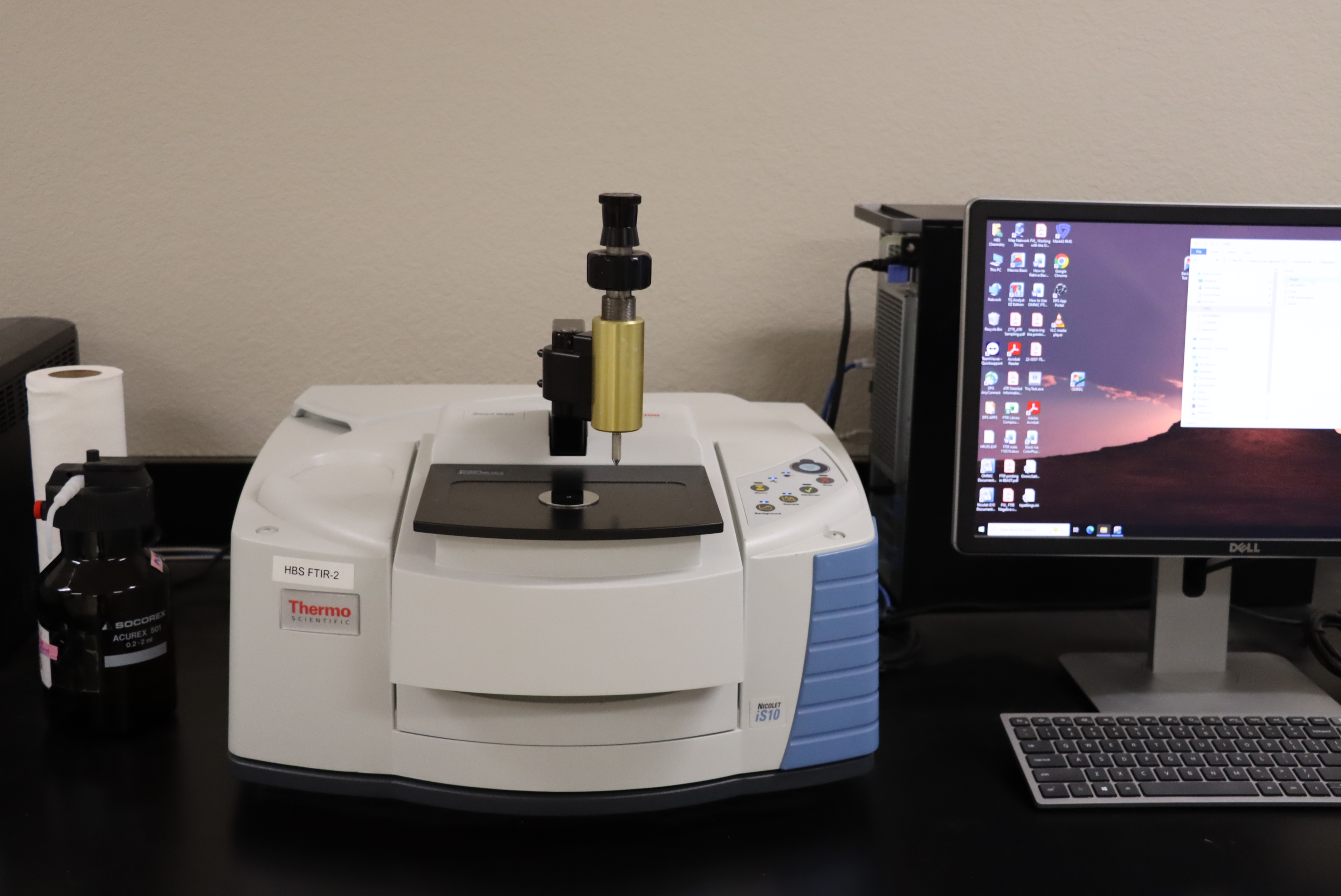 A Fourier Transform Infrared Spectrometer.
Currently, there are two instrumental techniques to analyze evidence in the Hobbs Lab. One technique is Gas Chromatography Mass Spectrometry (GC-MS), which is the best option for mixed substances, per Walterscheid. The other choice is to use Fourier-Transform Infrared (FT-IR) Spectroscopy, which is the preferred option when the substance is chemically compatible. The laboratory’s most recent instrumental analysis purchase is the Gas Chromatography Infrared Detector, which combines both techniques.
“I’m excited to be able to utilize the GC-IRD option,” said Walterscheid who worked for the New York Police Department in controlled substance analysis for three years. “For molecules that have similar fragmentation patterns and very similar molecular weights, the Gas Chromatography Infrared Detector is an excellent option.
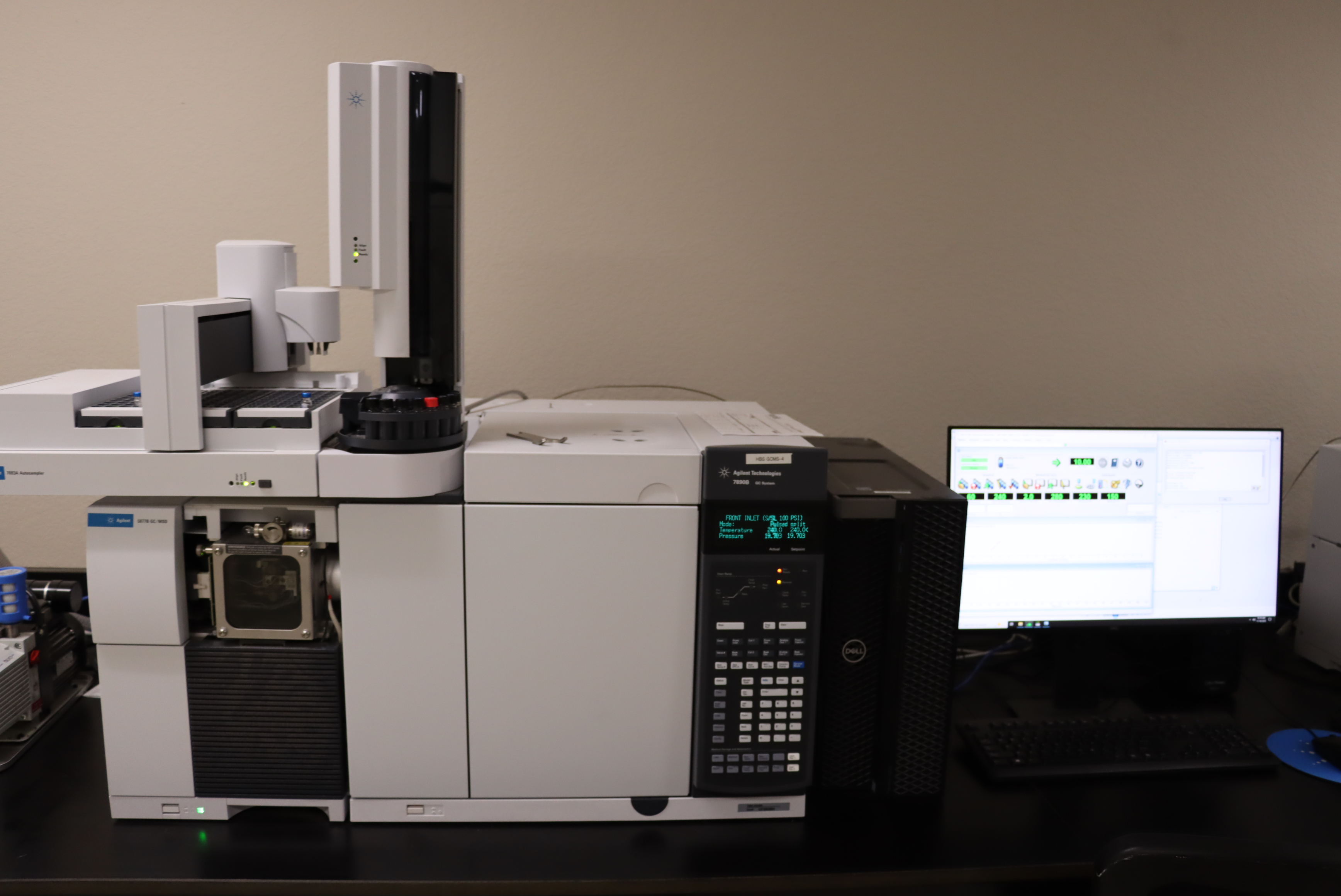 Gas Chromatograph Mass Spectrometer.
What’s the most unusual unique piece of evidence the laboratory has received in Hobbs?
The lab has analyzed many obscure items. “The most unusual that comes to mind was these small pyramid-shaped discs that were reported to contain LSD,” said Walterscheid. “The lab has also seen prison letters that had drugs absorbed into the paper.”
The most commonly seen drugs at the lab are methamphetamine followed by fentanyl and cocaine.
“I was kind of shocked about how many forms of drugs there were and that they can put anything in a pill form,” said Morley of her early experiences working at the lab.
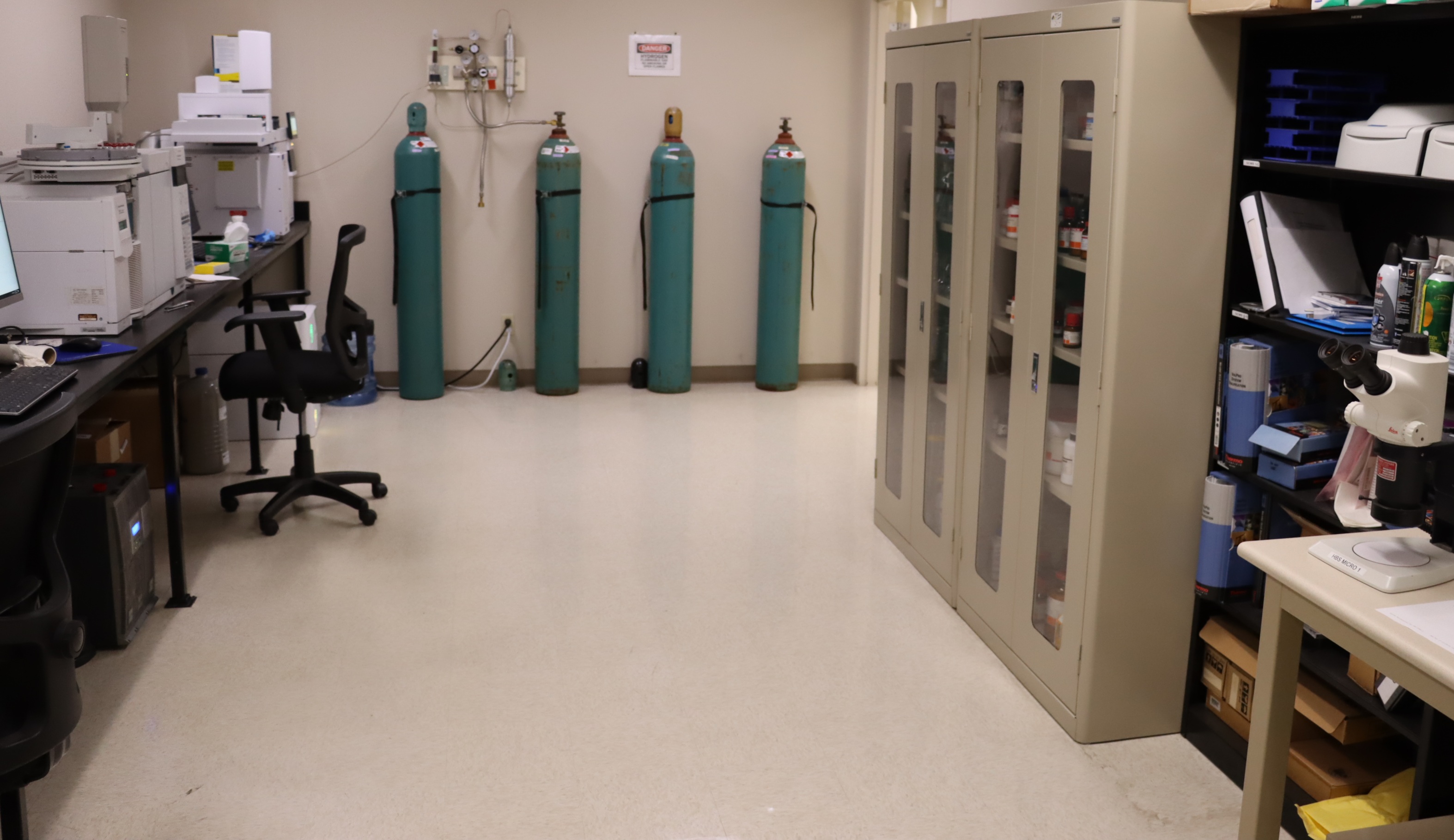 Inside the Hobbs Forensic Laboratory in November 2025.
No matter what the controlled substance ultimately is, Walterscheid feels the Hobbs Laboratory team “quietly” does a good job and has a great team.
“Our mission is to serve the citizens and communities of the state of New Mexico, and we take that seriously by working well together to provide scientific analysis of forensic evidence,” she said.
Story and photos by New Mexico Department of Public Safety Public Information Officer John Heil.